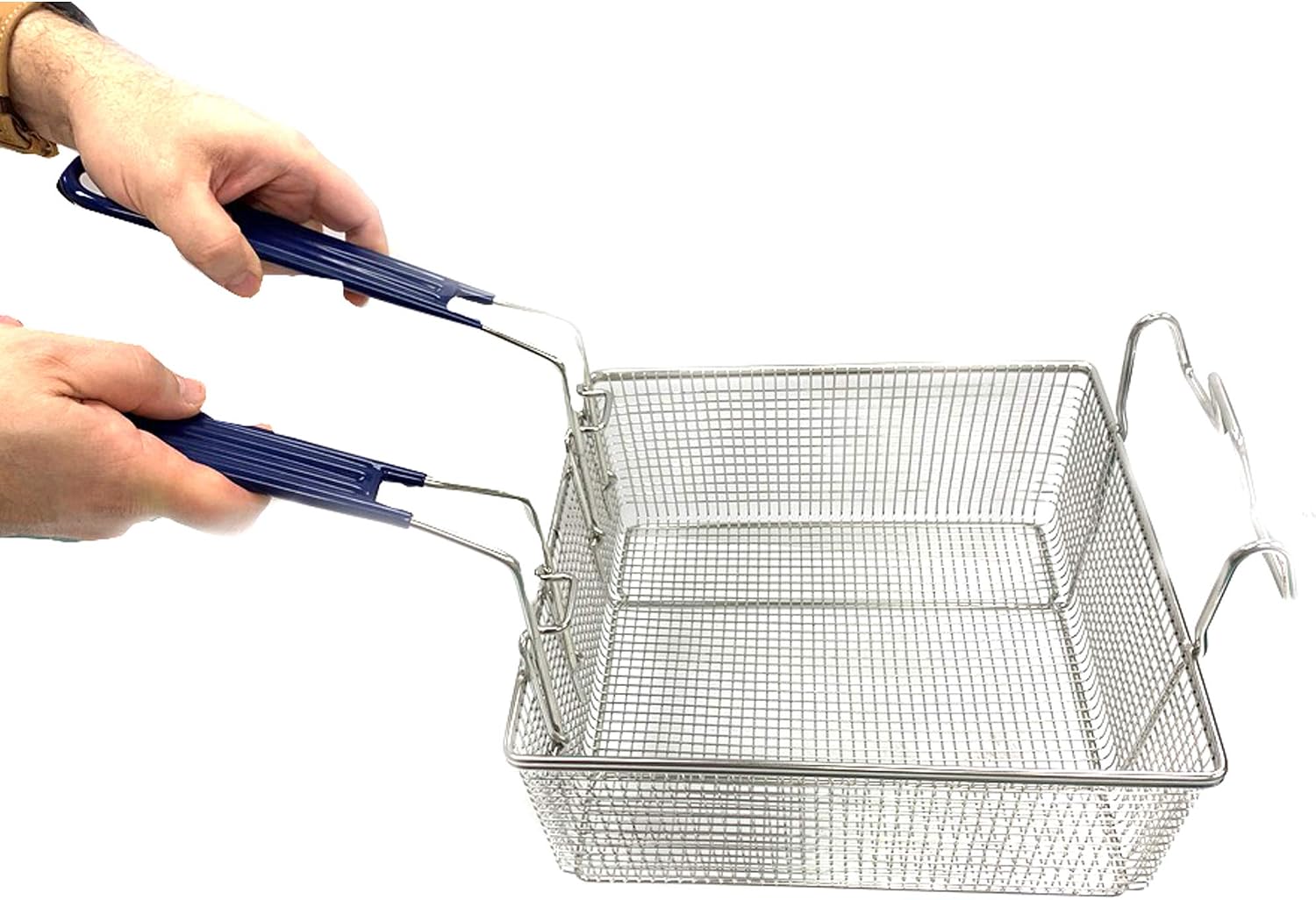
If you’ve ever wrestled a 15-pound turkey into a 30-quart aluminum pot balanced on a propane burner in your driveway, you already understand why the basket matters as much as the bird. An outdoor turkey or fish fryer is a large, propane-powered setup — most commonly a tall aluminum or steel stockpot sitting on a high-BTU burner stand — designed to fully submerge whole birds, large fish fillets, or big batches of seafood in hot oil. The basket is the wire or perforated cage that holds the food and lets you lower it in and lift it out safely without a grease fire on your hands. But here’s what the product listings don’t tell you clearly: not every basket fits every pot, the aluminum pot itself imposes real constraints on what basket materials are safe long-term, and “universal” is a word that outdoor fryer brands use more generously than physics warrants. This guide unpacks the Bayou Classic and Lodge ecosystems specifically — because those two brands dominate the outdoor fryer market — and gives you a framework for deciding whether a named-model basket, a cross-compatible option, or an aftermarket substitute is the right call for your setup.
The Aluminum Pot Variable — Why Material Matters Before Mesh
Most outdoor turkey fryers ship with an aluminum pot. Aluminum is cheap, heats fast, and is genuinely light enough to carry to the driveway. But aluminum is reactive, and that reactivity shapes your basket decision in two ways that rarely make it into product copy.
Galvanic corrosion in a mixed-metal setup. When dissimilar metals contact each other in the presence of an electrolyte — in this case, hot oil with trace moisture and salt — the more electrochemically active metal corrodes faster. Aluminum is near the active end of the galvanic series. If your basket is low-grade 201 stainless steel (common in budget aftermarket baskets) rather than 304, you’re not getting a dramatic reaction, but over dozens of frying sessions, reviewers on long-run forum threads consistently report pitting on aluminum pot rims and accelerated surface degradation on the basket itself. The Spruce Eats’ outdoor turkey fryer guide notes that matching or closely compatible metals are preferable in high-heat outdoor fryer applications for this reason.
Thermal expansion and fit. Aluminum expands at roughly twice the rate of stainless steel when heated. A basket that drops cleanly into a cold pot can bind, tilt, or wedge under load at 325–375°F frying temperatures if dimensional tolerances are tight. This is not a theoretical problem: owners of Bayou Classic’s B-Series pots paired with non-Bayou baskets consistently report binding at temperature, particularly with aftermarket baskets that spec slightly wider than the OEM unit.
The practical upshot: when you’re buying for an aluminum pot, you’re not just matching diameter — you’re managing a thermal expansion margin and a material compatibility question simultaneously.
Bayou Classic’s Basket Ecosystem — Where OEM Earns Its Price
Bayou Classic is the market-volume leader in outdoor turkey fryers in the U.S. as of 2026, with a product line that spans aluminum and stainless pots from 24 to 142 quarts. Their basket lineup breaks roughly into three tiers:
Aluminum baskets (model prefix: B-series matching pots) ship with entry-level kits at price points around $50–$80 for the full kit. The basket itself is stamped aluminum with a welded hook. These work, but owners consistently report surface oxidation after one or two seasons of use, especially if the basket is stored damp.
Stainless hook baskets (typically sold separately in the $18–$35 range) are Bayou Classic’s most popular standalone accessory. The dominant SKUs use a single-rod hook and a coated or bare stainless wire mesh cylinder. Per Bayou Classic’s published spec pages, the most common basket fits their 30-quart and 32-quart pots — the two best-selling outdoor fryer sizes — with a diameter tolerance of roughly ±0.25 inches. That margin is intentional: it accommodates the thermal expansion difference between the aluminum pot and the stainless basket at operating temperature.
The fryer basket fit question: does “fits 30-quart” mean anything? It means more than “universal” but less than “guaranteed.” Bayou Classic publishes pot interior diameter on their product pages; their 30-quart R Series pot (model SP10) has a published interior diameter of approximately 12 inches. Their standard basket for that pot is spec’d to approximately 11.5 inches — giving you the thermal expansion buffer. When reviewers at The Spruce Eats have cross-referenced third-party baskets claiming “fits Bayou Classic 30-quart,” the dimensional discrepancy is typically small (less than half an inch) but enough to cause binding issues at temperature in a meaningful share of owner reports.
The aftermarket calculation for Bayou Classic:
| Basket Type | Approx. Price (2026) | Material | Fit Risk |
|---|---|---|---|
| Bayou Classic OEM stainless hook basket | $18–$35 | 304 stainless (per spec page) | Low — designed to tolerance |
| Generic “fits 30-qt” aftermarket | $10–$20 | Often 201 stainless or unspecified | Moderate — verify diameter |
| Premium aftermarket (e.g., matched to published ID) | $20–$30 | 304 stainless listed | Low-moderate — verify gauge |
The cost delta between OEM and a well-spec’d aftermarket is $5–$15. For a setup you’re using twice a year on a holiday, that delta argues for OEM. For a fish-fry operator running the fryer weekly, the better aftermarket is defensible if — and only if — you can confirm 304 stainless and measured interior diameter match.
Lodge’s Position — Cast Iron Pots and a Different Compatibility Logic
Lodge is better known for cast iron cookware than outdoor fryers, but their outdoor cooking accessories line includes the Lodge 8-quart cast iron camp dutch oven and their occasional deep fry setups. More relevant to this article: Lodge manufactures and markets accessories — including baskets — for use with their enameled and bare cast iron pots, and they also appear in outdoor fryer accessory searches because consumers conflate their brand authority in cast iron with their fryer accessory line.
Here’s the honest framing: Lodge does not manufacture a dedicated outdoor turkey fryer basket ecosystem the way Bayou Classic does. Lodge’s relevant products are fry baskets and inserts designed for stovetop and tabletop cast iron Dutch oven setups, not the 30-quart propane turkey fryer format. Per Lodge’s product documentation on lodgecastiron.com, their basket accessories are sized for 5–8 quart vessels — meaningfully smaller than the 24–30 quart format required for a whole turkey.
This matters because Lodge appears in outdoor fryer basket searches frequently, and the compatibility question is real: a Lodge fry basket is not a replacement for a Bayou Classic turkey fryer basket. The vessel size mismatch alone — roughly 8 quarts versus 30 quarts — makes that impossible. However, if your outdoor cooking setup involves a smaller-format cast iron vessel (a whole catfish in a 12-quart pot, for example), Lodge’s accessories may be entirely appropriate. Serious Eats’ deep-fried turkey methodology notes that whole-bird frying requires a minimum of 26–30 quarts of pot capacity for safe oil displacement, which is well above Lodge’s cast iron accessory range.
Where Lodge becomes genuinely relevant to this buyer is in the smaller outdoor fish fry format: a single large fillet or small batch of catfish in a 10–14 quart cast iron or enameled pot over a propane burner. In that context, Lodge’s basket inserts are well-reviewed by owners for their durability and the even heat retention of the cast iron vessel. The tradeoff is weight: a full cast iron setup at that size runs 20+ pounds empty, versus 6–8 pounds for an aluminum turkey fryer pot of the same capacity.
Mesh Size, Gauge, and the Food You’re Actually Frying
The basket geometry question changes depending on what’s going in the oil. This is a tradeoff that outdoor fryer buyers chronically underweight.
Whole turkey: You need a basket with a large-format opening, a tight enough mesh to support the bird without it settling through, and a hook or handle rated for the weight. A 12–15 lb turkey in oil displaces significant volume. Bayou Classic’s turkey fry baskets are typically a simple wire cylinder with a hook; the “mesh” is wide-gauge wire in a loose pattern. That’s intentional — whole birds don’t fall through, and the wide pattern maximizes oil circulation. KaTom’s blog on fryer basket selection notes that basket wire gauge for whole-bird applications should be heavy enough to bear the food weight without deflection, typically 3–4mm wire.
Fish fillets and smaller pieces: Here you want a tighter mesh — fine enough that individual fillets or shrimp don’t slip through, but open enough to allow rapid oil turnover. A basket with 3/4-inch mesh spacing works for bone-in fish pieces; smaller shrimp or battered items require 1/2-inch or finer. This is where many “universal” outdoor fryer baskets fail fish-fry operators: the mesh is sized for turkey (coarse) but marketed broadly.
By the numbers — mesh guidance:
- Whole turkey, whole duck: 1–1.5 inch wire spacing, heavy gauge (3–4mm)
- Bone-in fish, crab legs: 3/4 inch mesh
- Shrimp, smaller fillets, battered items: 1/2 inch mesh or finer
- Hush puppies, small fritters: fine-mesh insert basket required
WebstaurantStore’s fryer basket material guide confirms this pattern: food type should drive mesh selection before price does.
The Decision Rule
Here’s how to cut through the compatibility noise:
If you own a Bayou Classic pot (any B, R, or SP series), buy Bayou Classic’s OEM stainless basket for that pot series. The $5–$15 premium over a generic is justified by the published dimensional tolerance engineering and confirmed 304 stainless construction. The aftermarket option becomes worth evaluating only if the OEM basket is backordered or discontinued for your specific pot size — in which case, measure your pot’s interior diameter, confirm the aftermarket basket’s outer diameter is at least 0.25 inches under that number, and verify 304 stainless in the spec sheet before buying.
If you’re running a Lodge cast iron Dutch oven setup at 8–12 quart capacity for fish, Lodge’s own basket accessories are the correct call — they’re sized and tested for that vessel family, and the cast iron’s thermal mass gives you more stable oil temperature recovery between batches, which owners report positively in long-run reviews.
If you’re buying a whole new outdoor fryer kit and the basket is part of the decision, prioritize the pot-basket system from a single manufacturer before mixing brands. Bayou Classic’s complete kit pricing at $80–$140 (depending on BTU and pot size, per their current product pages) prices in a matched basket. Lodge’s cast iron outdoor setups run higher, $120–$200+ for a comparable pot-plus-burner configuration, but are appropriate for smaller-format outdoor fish frying where thermal mass matters.
Never buy an outdoor fryer basket based on quart capacity alone. Confirm the interior diameter of your specific pot model against the exterior diameter of the basket — ideally from the manufacturer’s spec page, not the product title. “Fits 30-quart pots” is marketing copy until the inch measurements back it up.