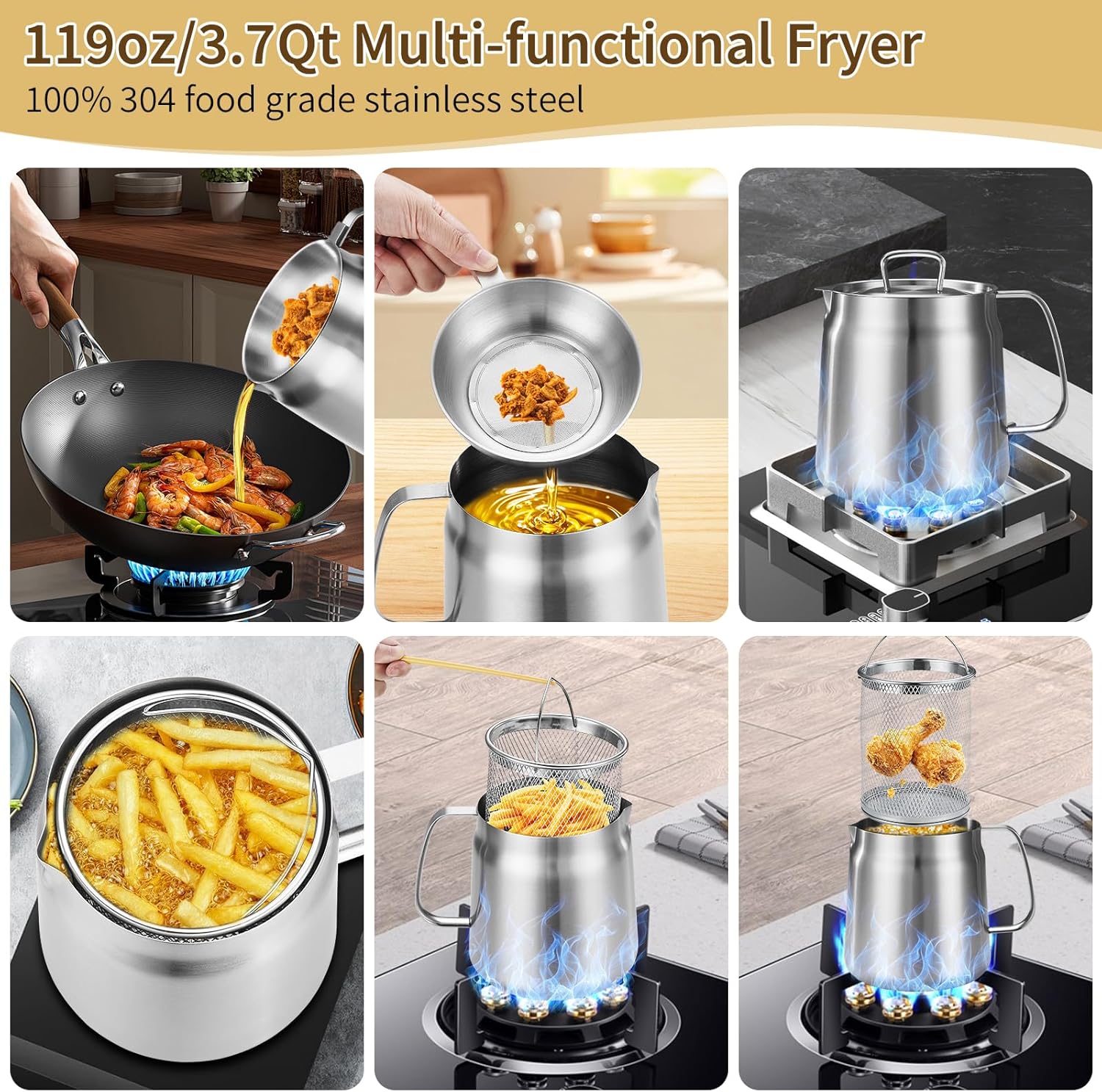
A stovetop deep fryer pot with a basket is exactly what it sounds like: a heavy pot you put on your stove burner, fill with cooking oil, heat to temperature, and then lower food into using a wire basket so you can lift everything out cleanly when it’s done. No built-in heating element, no digital controls — just pot, oil, fire, and basket. That simplicity is the appeal. It’s also where the decisions get genuinely complicated, because “stovetop fryer set” covers an enormous range of quality. The pot material — most commonly either 304 stainless steel or aluminum — determines how the set handles heat, acid, and years of hard use. And the basket, which buyers often treat as an afterthought, turns out to matter just as much. This guide walks through exactly where those decisions diverge, what the numbers mean, and how to land on the right choice for your volume and use case.
| EDITOR'S PICK[Saltlas 304 Stainless Steel Dee…](https://www.amazon.com/dp/B0D6X87GC1?tag=greenflower20-20) | Mid-tier[Gas One Aluminum Cooking Pot De…](https://www.amazon.com/dp/B0CNQFWJGQ?tag=greenflower20-20) | Budget pickDeep Fryer Pot with Basket | |
|---|---|---|---|
| Material | 304 Stainless | Aluminum | 304 Stainless |
| Capacity | 2L | 10QT (9.5L) | 2.8L |
| Oil Strainer | ✓ | — | — |
| Doubled Bottom | ✓ | — | — |
| Price | $38.97 | $24.99 | $19.89 |
| See on Amazon → | See on Amazon → | See on Amazon → |
Why Pot Material Is a Real Decision, Not Marketing Noise
The two materials you’ll see on virtually every stovetop fryer pot — 304 stainless steel and aluminum — behave very differently under sustained frying conditions, and the spec-sheet differences have direct operational consequences.
304 Stainless Steel
304 stainless is an iron-chromium-nickel alloy containing roughly 18% chromium and 8% nickel. It is non-reactive, meaning it won’t leach metallic flavor into oil or food even during extended high-temperature use. The KaTom Restaurant Supply Blog article “Stainless Steel Grades Explained” notes that 304 is the baseline food-contact standard across commercial kitchen equipment, and it is the grade referenced in NSF International’s NSF/ANSI 2 Food Equipment standard when specifying acceptable stainless contact surfaces. At gauge thicknesses between 18 and 20 gauge (roughly 0.8–1.0 mm wall thickness for most consumer sets; heavier at 16 gauge for commercial-grade pots), 304 distributes heat less evenly than aluminum but holds temperature better once it’s up to frying temp — which matters more for most frying tasks than fast initial heat-up.
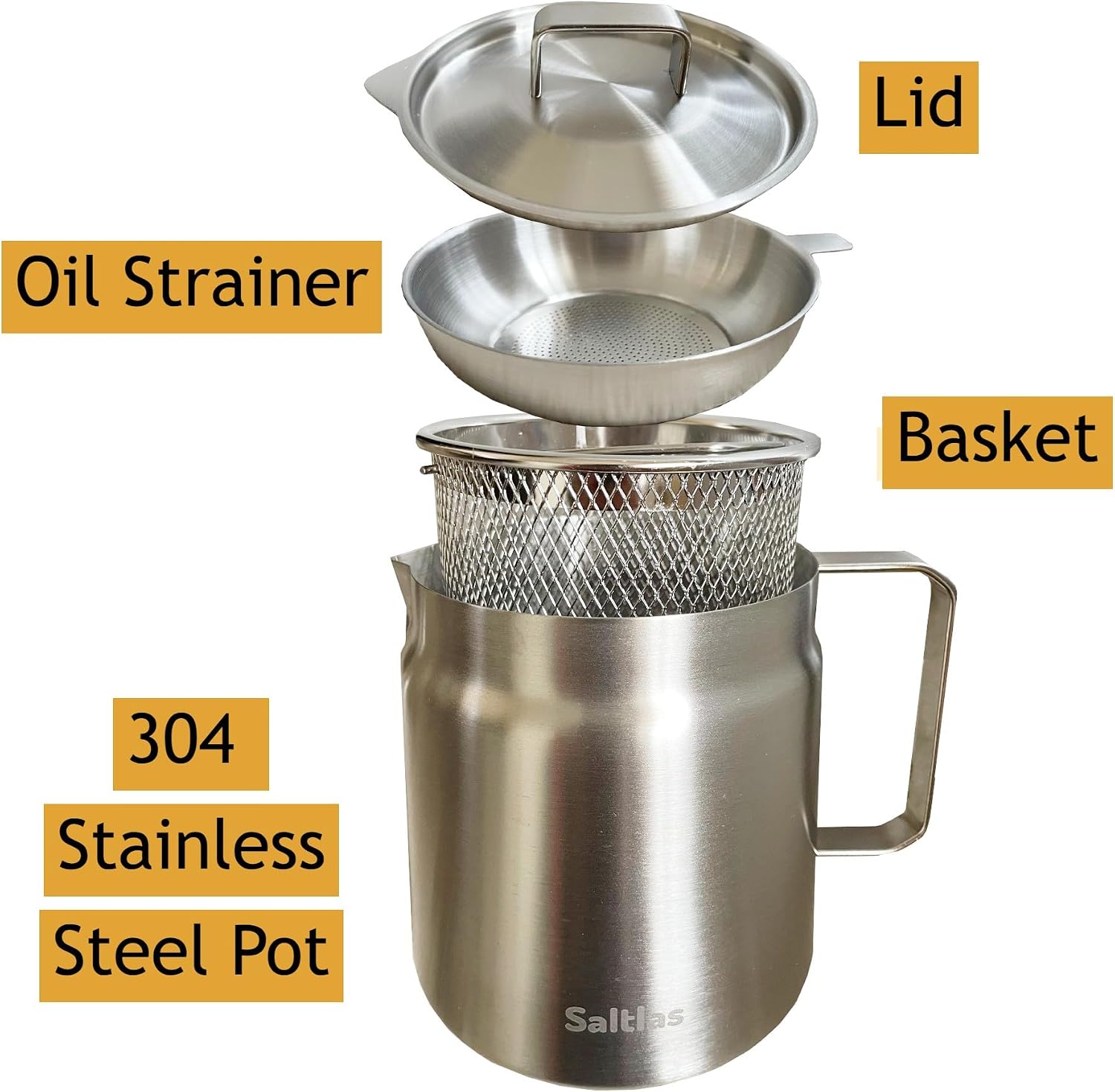
Saltlas
$38.97
In stock on Amazon
Check price on AmazonAnodized Aluminum
Aluminum heats faster and more evenly than stainless. In pure thermal-efficiency terms, aluminum wins: its thermal conductivity is roughly four times that of stainless steel. For stovetop frying, that means less time waiting for your oil to come up to 350°F and less temperature-recovery lag between batches. The tradeoff is reactivity — bare aluminum reacts with acidic marinades and some frying coatings — and long-term durability. Anodized aluminum (aluminum that’s been electrochemically treated to harden the surface) closes most of the reactivity gap and is the version worth considering. Foodservice Equipment Reports’ material-grade sourcing coverage from 2024–2025 flagged ongoing buyer confusion between anodized and bare aluminum in the sub-$50 import segment, with buyers routinely receiving bare-aluminum pots described in listing copy as “heavy-duty.”
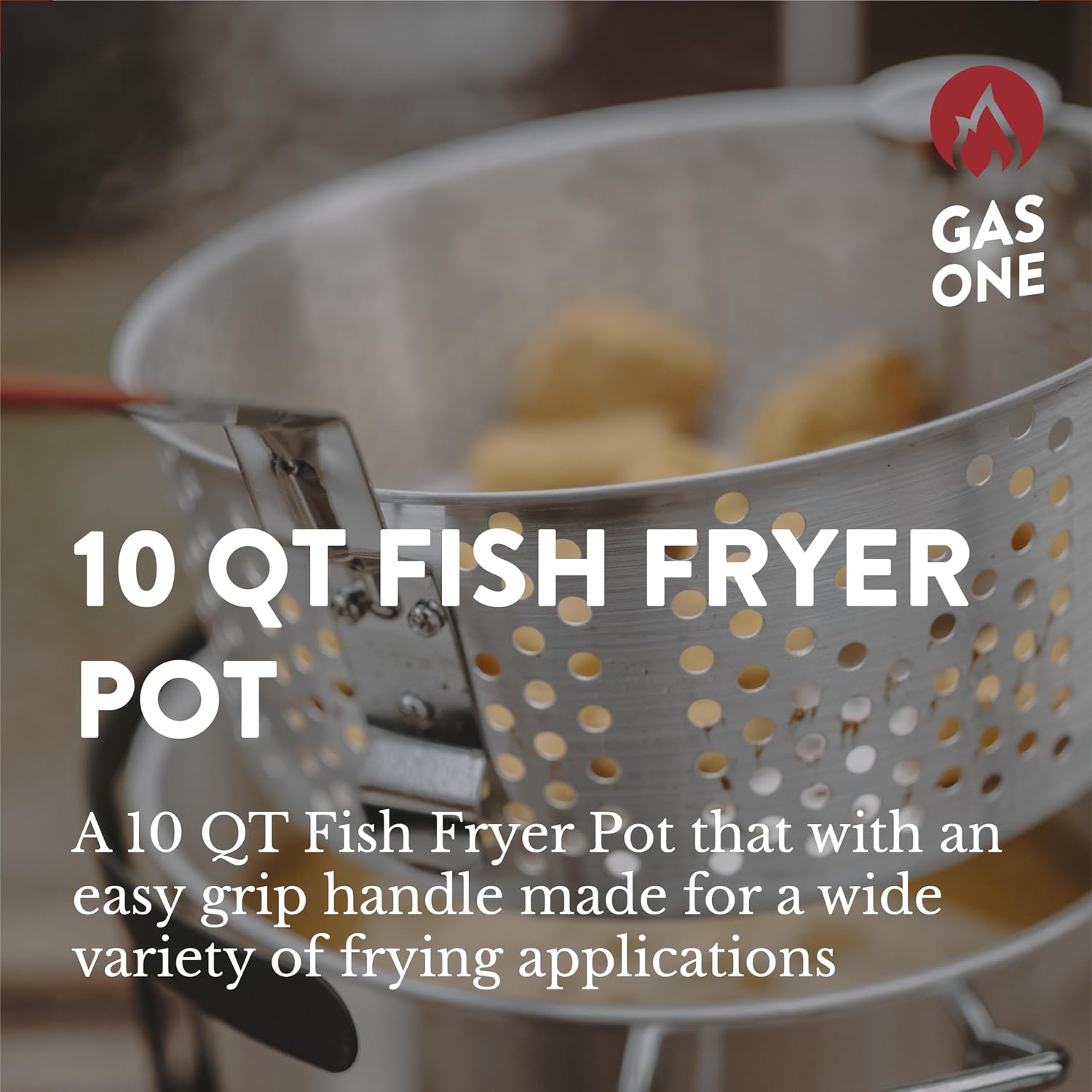
Gas
$24.99
In stock on Amazon
Check price on AmazonBare or Unspecified Aluminum
Uncoated, bare aluminum pots sold as “heavy-duty” at low price points are a different category from anodized. They are susceptible to pitting from acidic batters, difficult to clean fully, and prone to surface degradation under repeated high-heat cycling. A listing that says “aluminum” without specifying anodized or hard-anodized should be treated as bare aluminum until the seller confirms otherwise.
Deep
$19.89
In stock on Amazon
Check price on AmazonThe practical decision frame across all three:
- High-volume home use, small foodservice, or any use involving acidic batters: 304 stainless, 18 gauge or heavier.
- Speed-sensitive, single-protein, lower-acid frying (plain fries, tempura in neutral batter): Anodized aluminum is a legitimate contender at a lower price point.
- Bare aluminum or pots listed only as “aluminum” with no anodizing specification: Avoid for regular use.
The Basket: Mesh Gauge, Material Grade, and Where Sets Get Cheap
Here’s the thing most buyers don’t realize until after the purchase: on budget stovetop fryer sets, the manufacturer’s margin is almost always taken out of the basket. The pot might be serviceable; the basket is where corners get cut. And the basket is the piece that fails first — the piece you’re holding over a pot of 375°F oil when it does.
Basket Wire Gauge and Structural Integrity
Wire gauge in fryer baskets is counterintuitively numbered: a lower gauge number means heavier, thicker wire. Commercial replacement baskets typically specify 8–10 gauge frame wire with 14–16 gauge mesh. Stovetop home-fryer baskets sold in sets commonly run 16–18 gauge mesh with a lighter frame — fine for occasional use, marginal for daily volume. Serious Eats’ equipment guide “The Best Deep Fryers” notes that basket rigidity under a full chicken-part load is one of the most consistent complaints in mid-range fryer reviews, and that pattern holds across aggregated owner feedback on stovetop sets as well. A basket that flexes or bows under load is not a minor inconvenience — it’s a safety issue when you’re lifting over hot oil.
Basket Material Grade
Basket material presents the same 304 stainless vs. alternatives question as the pot, with one additional lower-cost option in wide circulation:
304 stainless mesh baskets are corrosion-resistant, don’t discolor, and handle acidic marinades without pitting at weld points. This is the correct choice for anything beyond casual use.
201 stainless baskets — sometimes labeled “18/0 stainless” or simply “stainless steel” without further specification — contain little to no nickel, which is how manufacturers hit lower price points. They are more susceptible to rust, especially at weld points and solder seams. The WebstaurantStore Blog buying guide “How to Choose a Commercial Deep Fryer” explicitly distinguishes 304 from lower-grade stainless in the context of basket longevity, noting that 201-grade baskets show rust within months in humid, high-use environments.
Nickel-plated steel baskets are commonly sold in the $15–$30 price range. Plating wears at solder points and weld seams, and once bare steel is exposed to hot oil and moisture, rust follows quickly. These baskets are identifiable by their shinier, more uniform appearance and significantly lighter weight compared to solid stainless. They are not suitable for regular frying use.
Basket Depth and Footprint
Basket depth and footprint determine whether the set is actually useful for what you fry. The basket needs to be deep enough that food doesn’t overflow the oil line when lowered, and wide enough to avoid crowding — crowding drops oil temperature and produces soggy food. The WebstaurantStore Blog buying guide on commercial deep fryers recommends no more than half the oil capacity as food volume per batch, which translates to basket capacity being roughly 40–50% of the pot’s interior volume at the oil fill line. A basket that’s undersized relative to the pot is almost always a sign that the set was priced down by shrinking the basket rather than the pot.
NSF Certification: When It Matters and When It Doesn’t
For home buyers, NSF certification on a stovetop fryer set is a useful quality signal but not a purchase requirement. For anyone operating in a commercial kitchen — food trucks, ghost kitchens, catering operations — it transitions from nice-to-have to operationally necessary.
NSF International’s NSF/ANSI 2 Food Equipment standard specifies material, finish, and cleanability requirements for food-contact surfaces. Many health department inspections and commercial kitchen certifications require that cooking equipment in commercial use carry NSF listing. The practical complication: stovetop fryer pots with baskets are less commonly NSF-listed than their countertop electric counterparts, because the certification process is equipment-level and requires the whole assembly — pot, basket, lid if included — to be evaluated together. Most consumer-grade stovetop sets sold through major retail channels don’t carry NSF listing.
Operators sourcing stovetop fryer setups for commercial environments should verify NSF status directly against the NSF Certified Equipment database, maintained and searchable by product category and manufacturer at NSF International’s official site, rather than relying on product listing copy. If you’re a food-truck or ghost-kitchen operator and cannot locate NSF listing for a specific stovetop set, the fallback is documenting 304 stainless construction, smooth weld points with no crevices, and full dishwasher cleanability — the underlying criteria the standard enforces — to support health inspection conversations.
Tier-by-Tier Comparison
The following summarizes how pot and basket specifications map to practical use cases and realistic price ranges.
Budget Tier: Bare Aluminum Pot, Plated or 201 Basket
Pot material is bare or unspecified aluminum. Basket is nickel-plated steel or 201 stainless, 18–20 gauge mesh. Typical price range: $15–$35. Suitable for very occasional frying — once or twice a month at low volume — where the cost of replacement after 12–18 months is acceptable. Not suitable for acidic batters, high-humidity storage environments, or any commercial application. The KaTom Restaurant Supply Blog “Stainless Steel Grades Explained” makes the relevant point directly: marketing descriptors like “heavy-duty stainless” have no regulatory definition and are not substitutes for grade disclosure.
Deep
$19.89
In stock on Amazon
Check price on AmazonMid-Range Tier: Anodized Aluminum or Thin 304 Pot, 304 or Heavy 201 Basket
Pot material is anodized aluminum or thin-gauge (20-gauge) 304 stainless. Basket is confirmed 304 stainless or heavy 201 grade, 16–18 gauge mesh. Typical price range: $40–$80. Covers the weekly home-cook use case well, particularly for neutral-batter or low-acid frying. Adequate basket rigidity for wings or fries at family-meal volume. Not ideal for daily frying or commercial secondary-station use. Confirm 304 on the basket specifically before purchasing — this is where the tier gets cut in undisclosed ways.
Gas
$24.99
In stock on Amazon
Check price on AmazonSerious Home / Prosumer and Commercial Stovetop Tier: 18-Gauge+ 304 Pot, 304 Welded Basket
Pot material is 18-gauge or heavier 304 stainless. Basket is 304 stainless with welded (not soldered) frame construction, 14–16 gauge mesh. Typical price range: $85–$300+ depending on capacity and whether NSF listing is included. Handles daily frying, acidic batters, multiple proteins, and sustained volume without basket degradation or oil-flavor contamination. The Serious Eats “Best Deep Fryers” guide identifies basket rigidity and material grade as the primary differentiators between mid-range and high-performing fryer equipment in this category — the same holds for stovetop sets. For commercial operators, plan for annual basket replacement regardless of initial quality; this is a wear component, not a capital asset.
Saltlas
$38.97
In stock on Amazon
Check price on AmazonMaking the Call
If you’re a home cook frying once or twice a week at moderate volume: an anodized aluminum pot with a confirmed 304 stainless basket in the $50–$80 range covers the use case. Don’t overpay for 18-gauge stainless on the pot; do insist on grade confirmation on the basket. The basket is what you’re holding over hot oil.
If you’re a serious home cook running near-daily volume with batters and multiple proteins: move to an 18-gauge 304 stainless pot with a confirmed 304 stainless welded basket, 16-gauge mesh or heavier. Budget $85–$150. The price delta from the mid-range tier pays for itself in basket longevity within the first year of regular use.
If you’re a food-truck or small foodservice operator using stovetop frying as a secondary station: source for NSF listing where achievable. If unavailable, document material grade and weld quality. Prioritize 16-gauge or heavier on both pot and basket. Replace baskets on an annual cycle.
If a basket on a set you already own is showing rust at weld points inside three months: that is a plating or 201-grade failure, not normal wear. Replace the basket before the pot — and source the replacement basket separately at confirmed 304 grade rather than buying another bundled set where the basket economics are identical.
The pot gets the attention in product listings because it photographs better. The basket is where the set earns its keep. Buy accordingly.